
"South American coffee regions"
1000 article(s) found

Taste region │ South America ─, the largest coffee producing region in the world
Professional barista communication please follow the coffee workshop (Wechat official account cafe_style) do you know? South America is the largest coffee producing area in the world. While people focus on production, in fact, there are more environmental issues to pay attention to. The world's largest total output refers to the number one producing area in the coffee industry, and there is no doubt that it is South America and Brazil. Its coffee output is about

The flavor of American coffee beans is American coffee good? the correct way to drink American coffee
For more information on coffee beans, please follow the Coffee Workshop (official Wechat account cafe_style) Coffee from Central and South America coffee from countries in the region is often described as having a nutty and caramel flavor and a floral flavor. Think of peanuts, walnuts and almonds. The wine is light and medium-bodied, with balanced and mild taste and moderate acidity. From regions such as Colombia and Costa Rica
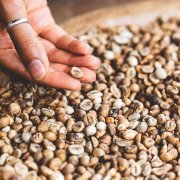
Guatemala Coffee beans Guatemala Coffee producing area Vivette South Fruit Plateau-Baohu Manor
For the exchange of professional baristas, please follow the coffee workshop (official Wechat account cafe_style) introduction: Guatemala is located in the isthmus of China and the United States, where many volcanoes form mountains and plateaus, producing high-quality high-altitude very hard coffee beans from Central America, making it the ninth largest coffee producer in the world. The main coffee producing areas in Guatemala are Antigua, Huehuetenango, Atitlan and C.

South American Columbia Coffee selected by Starbucks
Colombian Coffee description: Colombian coffee is moderately mellow, smooth and smooth, and has a distinct nut flavor. This super coffee can only be produced in the Narino region. Processing: washing method. Location: Colombia is the most northwestern country in South America, bordering Panama in the west. Narino is a member of southwestern Colombia

Introduction to the Regional treatment method of Santa Rita Coffee Bean in Colombia
Columbia Santa Rita Coffee Bean Flavor characteristics Manor area treatment method for growing coffee also requires daylight and proper shade, which is most suitable for planting on fertile soil or volcanic ash soil. Therefore, the origin of coffee is widely distributed in South America, Central America, the West Indies, Asia, Africa, Arabia, the South Pacific and Oceania. Such as Ethiopia and Tanzania in Africa

South American coffee flavor South American coffee
South America 1. Brazil (for coffee: Santos) Brazil has always been the world's largest coffee producer, earning 4 billion pounds a year from coffee exports alone. The flavor of Brazilian coffee is difficult to summarize, but Brazilian coffee with low acidity and flavors of butter, milk chocolate and nuts is wonderful. Among them, Santos coffee is more famous. two。 Goran.

Introduction to the flavor description and processing method of Brazilian Huangbo single coffee bean price manor region
Brazil is located in the Latin American region of the Western Hemisphere, in the eastern part of South America and on the west coast of the Atlantic Ocean. Brazil is bordered by all countries on the South American continent except Ecuador and Chile. Most of its territory lies between the equator and the Tropic of Cancer and is the most tropical country in the world. Within the territory 1x3

What's the flavor of American coffee beans? What are the coffee producing areas in America? Characteristics of American coffee
For more information on coffee beans, please follow the Coffee Workshop (official Wechat account cafe_style) the land bridge between Central and South America. There are seven countries, namely, Belize, Costa Rica, El Salvador, Guatemala, Honduras, Nicaragua and Panama. Coffee is produced in seven Central American countries, including Guatemala, Costa Rica and Hongdu.

Characteristics of Latin American coffee beans regional varieties produced by grinding scale treatment
The characteristics of Latin American coffee beans grinding scale to deal with the largest coffee producer, various grades and types of coffee account for 1/3 of the global consumption of coffee, accounting for a place in the global coffee market. Although Brazil faces several times higher natural disasters than other regions, it has enough acreage to make up for it. There are many kinds of coffee here.
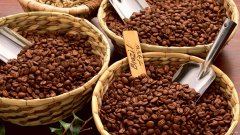
Central American coffee beans have unique environmental advantages. This paper introduces the differences and characteristics of coffee in several regions.
Professional coffee knowledge exchange more coffee bean information please follow the coffee workshop (Wechat official account cafe_style) Central American high-quality coffee beans black gold-"coffee" unique environmental advantages give birth to good coffee in Central America, one of the four major coffee producing areas in the world, with the natural advantages of sunshine, land and mountains, coupled with an adequate working population, make the area a growing area.

Description of Price and Flavor of single Coffee Bean in Brazil introduction to the Regional treatment method of Manor production
Brazil is located in the Latin American region of the Western Hemisphere, located in the eastern part of South America and on the west coast of the Atlantic Ocean, bordering all countries on the South American continent except Ecuador and Chile; most of its territory lies between the equator and the Tropic of Cancer. It is the most tropical country in the world. The territory has a tropical rain forest climate and a tropical prairie climate. The superior tropical natural conditions are very suitable.

Boutique coffee learn from the South American Colombian coffee selected by Starbucks.
Colombian Coffee description: Colombian coffee is moderately mellow, smooth and smooth, and has a distinct nut flavor. This super coffee can only be produced in the Narino region. Processing: washing method. Location: Colombia is the most northwestern country in South America, bordering Panama in the west. Narino is a member of southwestern Colombia

Is the harvest time of Central American and Indonesian coffee beans the same as Colombian coffee in South America?
Generally speaking, the Central American producing region of the Northern Hemisphere or Aceh in Indonesia is the busiest harvest and post-production period in February and March every year, so the beans can be shipped to the consuming countries in May-October every year; Brazil in the southern hemisphere is the busiest harvest and post-harvest period every year from June to July, and the beans can arrive from September to April of the following year. Because of
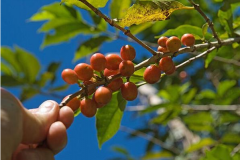
Coffee trip-Central and South America. Quality and characteristics of cultivation environment in various zones
Professional coffee knowledge exchange more coffee bean information please follow the coffee workshop (Wechat official account cafe_style) understanding Central American Coffee-Central America is the land bridge connecting North and South America, there are seven countries, namely, Belize, Costa Rica, El Salvador, Guatemala, Honduras, Nicaragua and Panama. All seven countries in Central America produce coffee, including Guatemala

Characteristics of Latin American coffee beans Growing area Flavor description Processing method
Each Latin American blend coffee is unique and does not include any Latin American single-origin coffee. Sometimes Starbucks 'blend coffee may also contain beans sourced from different regions of Mexico, Guatemala and Colombia. Starbucks buyers are also in Costa Rica, El Salvador and Nepal.

Description of characteristics and flavor of Latin American coffee beans regional varieties produced by taste treatment
Flavor description of Latin American coffee beans wild (wild): describe coffee with extreme taste characteristics that remind you of the vast grasslands of Africa. Sweet: it is a commonly used adjective to describe coffee without sharp flavor. Strong (strong): in popular usage, strong describes deep baking.

South American boutique coffee beans | introduction to the varieties and flavors of coffee producing areas in the Holy Valley of Ecuador
More information about coffee beans Please follow Coffee Workshop (official Wechat account cafe_style) located in Ecuador in Latin America, which is straddled by the equator and has a variety of landscapes that make it one of the most biologically diverse countries in the world. This also allows coffee beans to be grown in all four natural regions of Ecuador, even thousands of miles away in Galapago.

Medium texture description of Peruvian Coffee Flavor method of Grinding of Fine Coffee beans in producing areas
Peru is located in western South America, with a coastline of 2254 kilometers. The Andes runs from north to south, and the mountains account for 1% of the country's area. it belongs to the tropical desert region with a dry and mild climate. Peruvian coffee is mostly grown at the foot of the Andes, where it is rich in traditional Central American top coffee beans. Peru is a huge and diverse land for them to produce a large number of different kinds.
Coffee producing areas: the story of American coffee producing areas what are the characteristics and flavors of American coffee beans?
Professional coffee knowledge exchange more coffee bean information please follow the coffee workshop (Wechat official account cafe_style) the seven coffee producing areas of Costa Rica are distributed from northwest to southeast and inland central plateau. The volcanic terrain of Costa Rica has rich volcanic ash, rich weather and abundant rainfall, which makes coffee one of the main agricultural products in Costa Rica. In terms of quantity, Colombia

Sweet flavor nurtured by microclimate in the main coffee producing areas of Central and South America, Panama coffee bean producing areas.
Professional coffee knowledge exchange more coffee bean information please follow Coffee Workshop (Wechat official account cafe_style) Front Street-Panamanian Coffee introduction Central America has the natural advantages of sunshine, land, and mountains, and an abundant labor force, the region is uniquely blessed to grow and produce high-quality coffee. In the late 19th century, coffee had become a source of economic growth in Central American countries.